
Friday Forward - Be Bored (546)
Why filling every idle moment might be costing us our best ideas

I’m bored!
This is a refrain parents hear often from their children. But kids aren’t the only ones who hate being bored; avoidance of boredom has become a problem for the rest of us as well, especially for leaders.
How desperate are we to avoid boredom? Researchers found we hate being bored so much that we are willing to hurt ourselves to prevent it.
In 2014, a research group at the University of Virginia left participants alone in a room for up to fifteen minutes with nothing to do but sit with their own thoughts. The subjects had one source a stimulation: a button that delivered a mild electric shock when pressed.
Even though they knew the shock was painful, two-thirds of the men and a quarter of the women in the group still chose to press the button rather than sit still. One participant shocked himself 190 times in 15 minutes, or once every five seconds.
It is tempting to laugh at those participants. But most of us do a very similar thing every day, but with a smartphone instead of a shock button.
The average American now checks their phone well over 100 times a day. While waiting three minutes for an Uber. While stuck at a red light. While waiting for an elevator. While, yes, sitting on the toilet. The phone comes out every time.
I’m just as guilty of this as anyone. While I preach the value of unplugging, I regularly find myself reaching for my phone to check a status update, or maybe even to make a note about something I’m thinking about. It’s become reflexive and automatic.
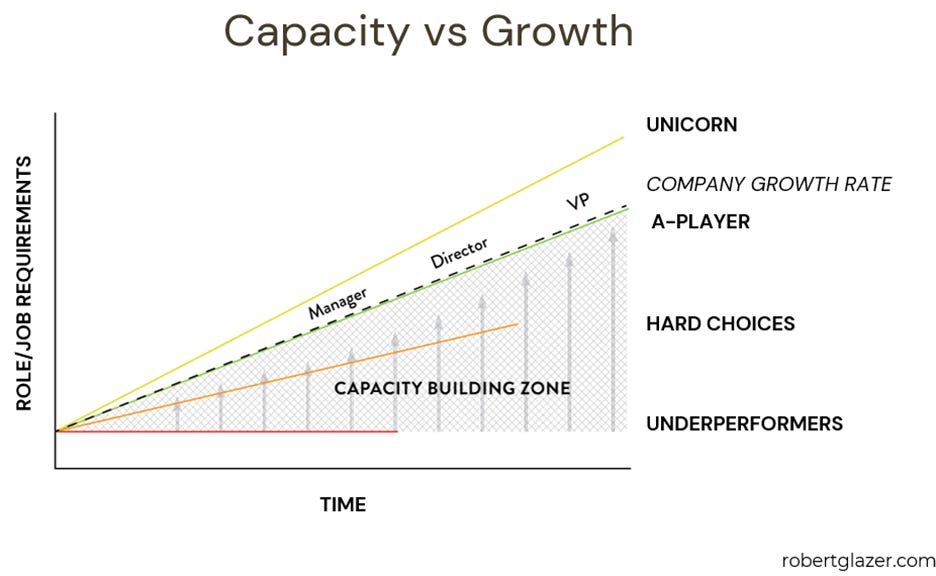
That avoidance has a real cost. Personally, some of my best ideas have come directly out of boredom. Years ago, I was thinking through a problem in the shower and sketched something on the glass that became the most important graph I’ve ever created.
This chart has been shared by coaches around the world and formed the basis of the capacity building framework discussed in several of my books. And it’s hardly the only example. A brainstorming conversation during a cab ride years ago gave me the idea for a business I later built and sold. More than a few Friday Forwards started as a stray thought on a drive, or on a chairlift with no cell signal.
There is a reason boredom produces ideas that busyness cannot. When your mind isn’t occupied with a task or a feed, it doesn’t just stop. Instead, it keeps working in an unfocused way, making connections between things you weren’t consciously thinking about. That’s how a stray thought during a moment of boredom becomes the answer to a problem that stumped you all week.
Daniel Kahneman gave us useful language for the two ways the mind runs. System 1 is fast, automatic, and always scanning for the next input. System 2 is slow and deliberate. A phone is engineered to keep System 1 busy. Every notification delivers a small hit of dopamine and pulls us back into reacting.
That reactive mode feels productive, but it prevents us from engaging System 2 and triggering our most original thinking. Every time we fill an idle moment, we feed the part of the brain that reacts and starve the part that creates.
Those of us that are older can still access System 2 because we remember what it was like to sit on empty trains, wait for a ride, or eat alone, sitting with just our own minds. But anyone who grew up with a phone in hand has rarely, if ever, had these moments of daydreaming or pondering. For these younger people, who are not used to boredom, I have a suspicion that being alone with their mind is very likely a major contributor to the record levels of anxiety we see today. It surfaces thoughts and feelings you haven’t learned to handle or take time to process, so you reach for a distraction before you have to face them.
The participants in that UVA study chose a painful shock over fifteen minutes alone with their thoughts. Most of us make a less jarring version of that same trade dozens of times a day, sacrificing our most valuable thinking for a brief moment of relief. The next empty minute isn’t always a problem to solve. It may be where your best thinking is waiting.
Quote of the Week
“All of humanity’s problems stem from man’s inability to sit quietly in a room alone.” – Blaise Pascal
Have a great weekend,
-Bob
New from Premium
What you say is true, our distractions inhibit creativity. If our brain is always focused on something we don't allow space for ideas to bubble up.
I wrote this post about a year ago. It’s related but talking about a different approach. Back then while I was not fully aware, I was talking about being intentional.
I hope you like it. Abrazo 🫂
https://substack.com/@mosquitoimpactopositivo/note/p-159692871?r=6w8xdw&utm_medium=ios&utm_source=notes-share-action